 Ciao! Questo contenuto è disponibile anche in Italiano.
Italian Alpine Food & Traditional Recipes
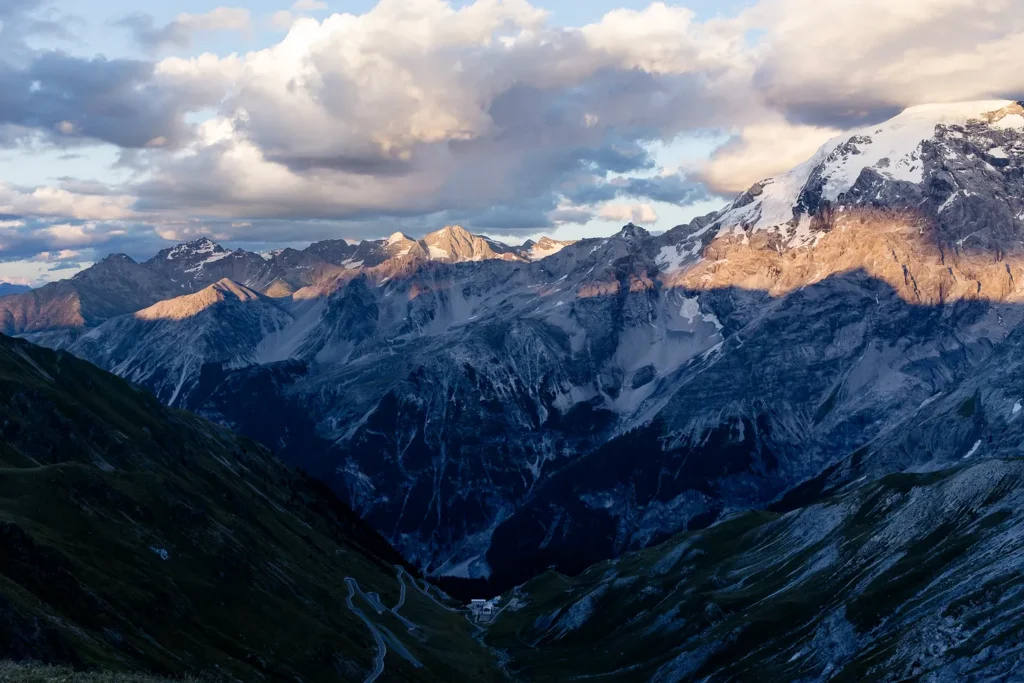
Italian Alpine Food: Traditional Recipes from the Mountains Ahead of Milano-Cortina 2026
Butter, buckwheat, snow—and why mountain food tells a different Italian story.
With the Winter Olympics returning to Italy in 2026, between Milan and Cortina d’Ampezzo, global attention is once again turning to the Alps. But beyond ski slopes, postcard villages, and Olympic venues, there is another story worth telling, and it is obviously about food: what Italian alpine food really tastes like, and why it is so different from the rest of Italian cuisine.
Italian mountain cooking doesn’t follow the familiar Mediterranean script. It speaks a colder, deeper language, shaped by altitude, long winters, and centuries of adaptation to a harsh environment. Butter replaces olive oil. Buckwheat stands in for wheat. Cabbage, potatoes, leeks, apples, and cow’s milk cheese become essential. The result is a cuisine that feels austere, nourishing, and profoundly comforting.
Italian Alpine Food and the Milano-Cortina 2026 Olympics
The regions touched by the Milano-Cortina Winter Olympics sit along one of Italy’s most fascinating cultural borders. Northern mountain cuisine is often perceived as “less Italian” simply because it doesn’t match the global idea of Italian food built around tomatoes, olive oil, and sunshine.
Yet alpine food is just as deeply rooted in tradition. It reflects different needs: surviving winter, cooking with limited ingredients, preserving energy, and making the most of what grows at high altitude. In this sense, mountain cuisine is one of the clearest expressions of how geography shapes Italian cooking.
Why Butter Replaces Olive Oil in Northern Italian Cooking
One of the most striking differences between alpine and Mediterranean Italian food lies in fat. Where central and southern Italy rely almost instinctively on extra virgin olive oil, much of Northern Italy cooks with butter.
As food historian Massimo Montanari explains, Italy developed at the intersection of Roman and Germanic cultures. The Roman agricultural model revolved around wheat, wine, and olive oil. Germanic populations, tied to forests and livestock, relied on meat, milk, butter, and beer. The Alps are where these two food systems meet most visibly.
Even a simple tomato sauce reveals this divide. In the North, butter and onion often form the base. In Tuscany, olive oil and garlic dominate. In the South, olive oil and onion prevail. These unconscious choices result in entirely different flavours, and entirely different ideas of what “home” tastes like.
Buckwheat, Cabbage and Cheese: Ingredients of the Alpine Kitchen
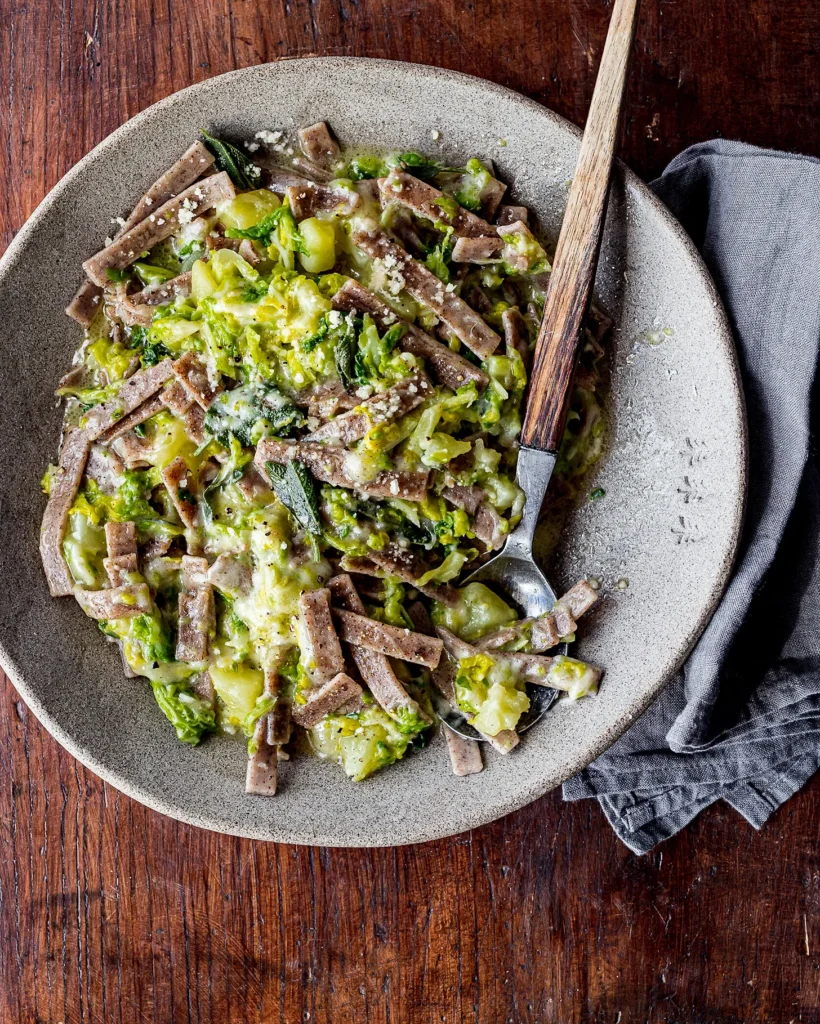
Italian alpine cuisine is built on ingredients that thrive in cold climates and poor soils. Buckwheat arrived in Italy in the late Middle Ages and quickly became a staple of mountain cooking. Naturally gluten-free and rich in flavour, it is used for pasta, polenta, focaccia, and cakes.
Vegetables such as Savoy cabbage, potatoes, leeks, and chard replace the leafy greens typical of central Italy. Cheese is predominantly made from cow’s milk, often aged and deeply aromatic. Butter is generous, and the fat of choice when it comes to cooking. These are foods designed to sustain bodies through winter.
Traditional Alpine Recipes from Italy’s Olympic Regions
Some of the most iconic traditional recipes from Italy’s alpine and Olympic regions include:
- Pizzoccheri from Valtellina, buckwheat pasta layered with potatoes, cabbage, cheese, and melted butter
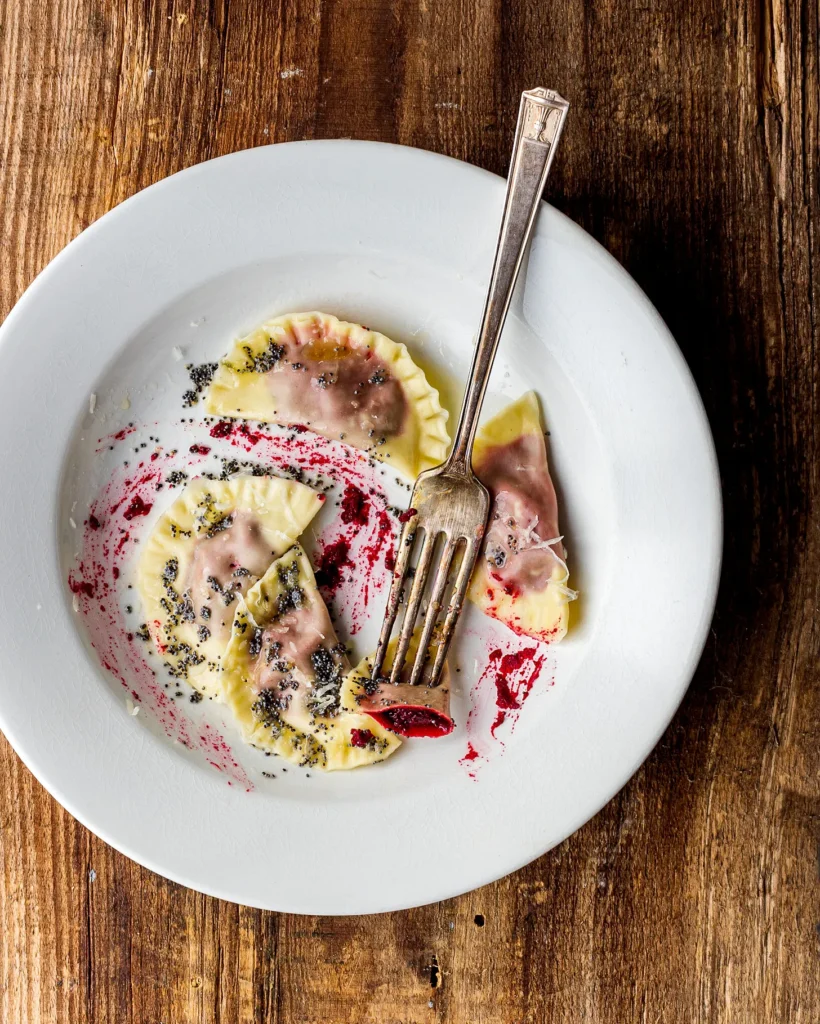
- Casunziei from Cortina d’Ampezzo, delicate stuffed pasta that changes with the seasons, often filled with beets and potatoes in winter
- Apple fritters, simple and comforting, made for snowy afternoons
- Rustic buckwheat cakes, rich with butter and grated apple, naturally gluten-free and deeply satisfying
These dishes don’t aim to impress. They aim to nourish, warm, and endure.
Why Mountain Food Is Still Deeply Italian
Italian alpine food reminds us that Italian cuisine is not one thing. It is a mosaic of local traditions shaped by land, climate, and history. The mountains tell a different story, but it is no less Italian than pasta al pomodoro or tiramisù.
As the world turns its eyes toward Milan and Cortina for the 2026 Winter Olympics, this is the perfect moment to bring mountain food back to the centre of the table as a fundamental part of Italy’s culinary identity.
Want to cook from the Alps?
👉 In Letters from Tuscany, I share a full alpine-inspired winter menu and, behind the paywall, two classic step-by-step recipes from Cucina Povera, with notes and substitutions for those cooking outside Italy. If you’d like to explore this different Italy through cooking, you’ll find the full story and recipes in the newsletter.




Comments (0)