
Cooking by the Seasons: Tradition, Vegetables, and a Tuscan Carnival Cake
Winter is still lingering here in the Tuscan countryside. The log burner in the living room is working overtime, radiating that dry, bone-warming heat that slowly reaches every corner of the house. Outside, the fields are still painted in muted shades of brown and grey, and rain seems to arrive almost every day.
Yet there are small signals that the seasons are quietly turning.
Bulbs are pushing their pointed leaves through the soil. The days stretch a little longer. Soon wild greens will appear again along the country roads — the ones I gather for salads, frittate, and rustic savoury pies.
Italian cooking is deeply seasonal, and in Tuscany the passing of the year is marked by vegetables, traditional recipes, and celebrations such as Carnival. This moment, balanced between winter and spring, always makes me think about how closely cooking is tied to time: to the seasons, to tradition, and to the ingredients that return every year to mark them.
February in my kitchen has been full of these reflections — on vegetables, on tradition, and on the small rituals that make the colder months brighter. I wanted to gather them here for you.
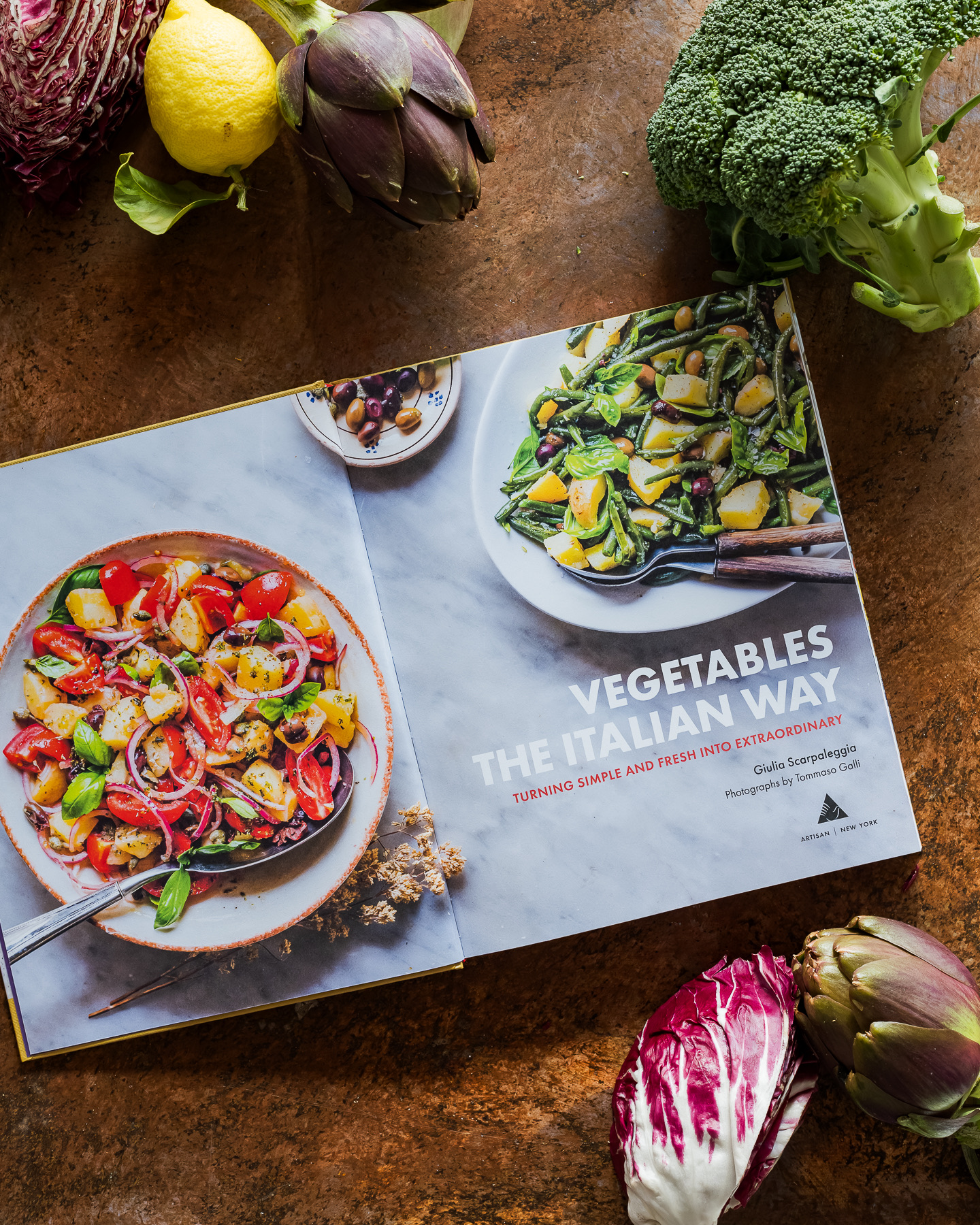
Cooking Italian Food Through Vegetables
When people think about Italian cuisine, they often picture pasta, pizza, or a perfectly grilled steak.
But the real backbone of Italian home cooking — the food cooked every day in kitchens across the country — is vegetables.
Vegetables are the protagonists of countless regional dishes, they anchor our meals, define the seasons, and shape the rhythm of everyday cooking.
In Italy, cooking vegetables has never meant treating them as a side dish. Instead, vegetables are often the centre of the table — slowly braised until tender, roasted until caramelised, or stewed in olive oil until their fibres soften and their sweetness deepens.
This approach might sound modern today. In fact, there is now a term for it: vegetable-forward cooking.
But in Italy it has been the norm for centuries. As food historian Massimo Montanari writes, the persistent presence of vegetables is one of the most distinctive traits of Italian cuisine, a legacy shaped by peasant traditions that even high cuisine could never ignore.
Think of a plate of pasta tossed with broccoli cooked until it almost becomes a sauce, eggplants slowly melting into caponata, or green beans simmered with tomatoes and olive oil until they surrender into softness.
If you’d like to explore this idea further, I recently wrote a piece about the philosophy behind my upcoming cookbook.
→ Read the full newsletter: 5 Things to Know About Vegetables, the Italian Way

What “Traditional Cooking” Really Means
When I describe my cooking style, I usually say something very simple: traditional. Yet the more I think about that word, the more complex it becomes.
Tradition is not a rigid set of rules, nor a nostalgic snapshot of the past. It is a living practice shaped by geography, climate, memory, and the habits passed down through generations.
Traditional cooking, for me, means cooking in rhythm with the seasons.
It means feeling the urge to fry zucchini blossoms in June, to knead grape focaccia when the vineyards begin to smell of harvest in September, and to bake panforte or cavallucci when winter arrives. These dishes are tied not only to ingredients but also to what one writer beautifully called “emotional and nostalgic deadlines” — the moments of the year when certain foods simply feel right.
Tradition also carries practical knowledge: how to preserve, ferment, dry, and reuse ingredients. Many of the recipes we now admire as classic Italian dishes were born from necessity, shaped by frugality and common sense.
In a curious twist, these old rural recipes often feel surprisingly modern today. Long before terms like plant-based or sustainable cooking became popular, Italian home cooking was already built around seasonal vegetables, simple ingredients, and minimal waste.
I often say that I cook like a Tuscan grandmother, but with a very large cookbook collection.
→ Read the full reflection: The Tradition I Stand For
The Small Rituals That Brighten Winter
If vegetables anchor our everyday cooking, seasonal sweets often mark the calendar.
And in Tuscany, February means one thing: Carnival. Carnival was historically the last moment of indulgence before the austerity of Lent. In Latin, people used to say semel in anno licet insanire — once a year, it is permitted to go a little mad.
Tuscan bakeries celebrate this season with trays of crisp cenci, delicate fried ribbons of dough dusted with sugar, and with fritters scented with orange zest.
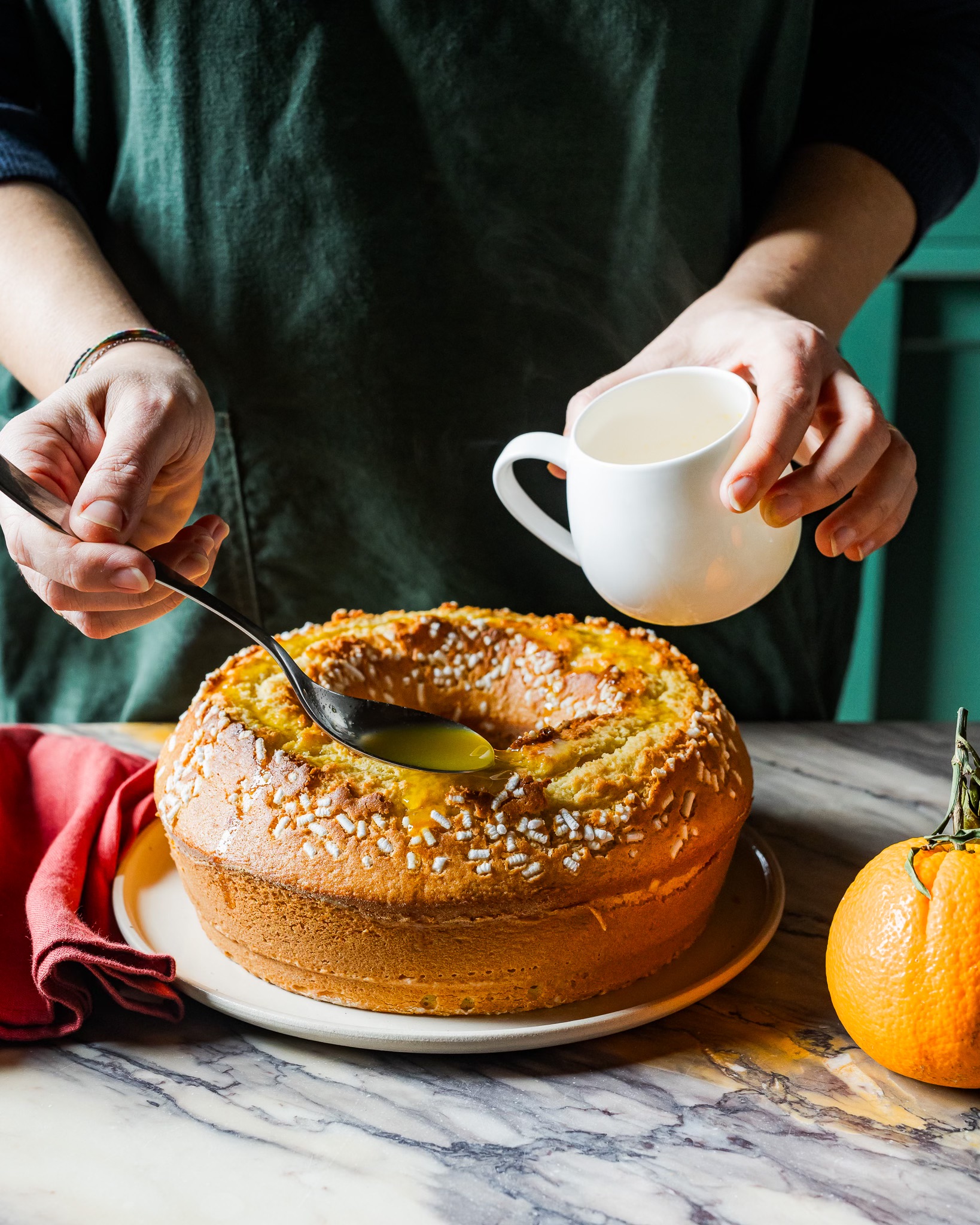
At home, I often bake a lesser-known Carnival cake: berlingozzo.
It is a rustic Tuscan ciambellone flavoured with orange zest, orange juice, Vin Santo, and sometimes aniseed — deeply aromatic, simple, and meant to be sliced throughout the day. This kind of cake belongs to the category of domestic cakes: practical cakes you keep on the kitchen counter and share over several days, rather than elaborate desserts reserved for special occasions.
When I grate the orange zest into the batter, the scent instantly fills the kitchen: sharp, bright, almost intoxicating. On gloomy winter days, it feels like a small promise that spring will eventually arrive.
→ Read the full story and recipe: Tuscan Berlingozzo: a Carnival Cake Scented with Orange
Cooking with the Rhythm of the Year
Vegetables slowly braising in olive oil. Seasonal cakes perfumed with citrus. Recipes that return every year like familiar landmarks. All these elements are part of the same story.
Italian home cooking is not defined by complicated techniques or elaborate plating. It is defined by time, the passing of seasons, the patience of slow cooking, and the rituals that mark the calendar.
Cooking this way means paying attention to what grows around you, waiting for ingredients to reach their moment, and returning to recipes that have been cooked again and again. It is a slower way of cooking, but also a deeply joyful one.
If you enjoy these reflections on seasonal cooking, you can find more stories and recipes in my newsletter Letters from Tuscany, where I write each week about life, food, and traditions from our corner of the Tuscan countryside.


Comments (0)