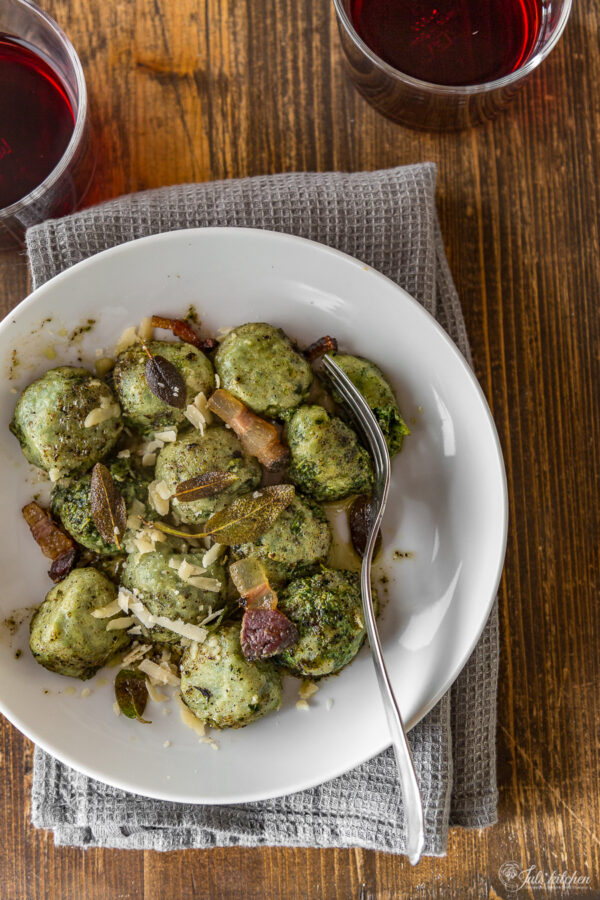
Ricotta and kale gnudi
Servings 4
Ingredients
For the gnudi
- 500 g of cavolo nero, 300 g once boiled and squeezed
- 1 tablespoon of extra virgin olive oil
- 1 clove of garlic
- 300 g of cow ricotta cheese
- 2 tablespoons of grated Parmigiano Reggiano
- 1 egg
- Nutmeg
- Salt
- 300 g of semolina flour
For the dressing
- 50 g of butter
- 50 g of guanciale, you can substitute guanciale with pancetta
- A handful of sage leaves
- Aged Pecorino Toscano, Pecorino Romano or Parmigiano Reggiano would do as well
Instructions
- Start with the ricotta: you need to remove any whey from it, so spoon the ricotta into a colander and let it drain for a few hours (if the ricotta is very liquid, you can leave it in the fridge overnight).
- Wash the cavolo nero leaves, remove any hard stalk and drain.
- Bring a large pot of water to a gentle boil, add the cavolo nero leaves, pushing them into the water, and cook on medium flame for about 15 minutes, or until tender.
- Drain the leaves well, let them cool down and squeeze them with your hands. A potato ricer works magic to squeeze the excess water out of vegetables like spinach, kale and the like.
- Once the cavolo nero is perfectly squeezed, chop it with a knife: don’t be tempted to use a blender, you don’t want a purée but some texture for the gnudi.
- Sauté the chopped cavolo nero in a pan with a tablespoon of with extra virgin olive oil and a minced clove of garlic. Scoop in a bowl and let it cool down completely.
- Collect in a bowl the well-drained ricotta, the cold cavolo nero, the Parmigiano Reggiano and a beaten egg. Add a generous pinch of grated nutmeg and mix thoroughly with a fork. Season with salt.
- Sprinkle generously a tray with semolina flour. Form the gnudi shaping with your hands balls slightly smaller than a walnut. Gently roll the gnudi in semolina flour, then leave them into the semolina. The semolina creates a film around the gnudi, thus preventing them from melting into the boiling water.
- You can cook the gnudi as soon as they are ready but if you allow them a few hours in the fridge into the semolina, the flour will absorb their moisture and you’ll have firmer gnudi. In other words, you’ll be sure that they won’t melt in the water.
- When you’re almost ready sit at the table, bring a large pot of water to the boil and prepare the dressing for the gnudi.
- Cook the guanciale cut into thin strips and set aside. Melt the butter with the sage until the leaves are crisp, then set aside.
- Cook the gnudi in batches in boiling salted water. When they float to the top – just a few minutes, sometimes it only takes one – lift them out with a slotted spoon and move them into a serving plate. Drizzle the gnudi with the brown butter and sage, add the crisp guanciale and a sprinkling of grated pecorino. Toss the gnudi with care and gentleness, otherwise you might break them. Serve immediately.
Tried this recipe?We love to see your creations! Snap a pic and tag @julskitchen and hashtag it #myseasonaltable!